

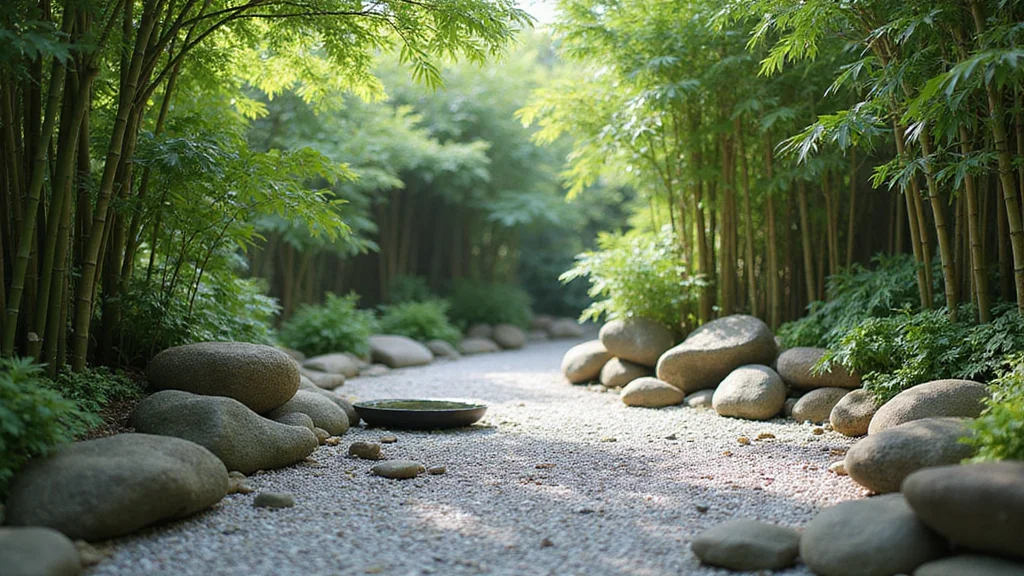
Creating a peaceful retreat in your urban space is more than just a trend—it’s a way to bring tranquility into your busy life. In today’s fast-paced world, many of us crave a serene escape right at home. That’s why I put together this guide to Zen garden design as a meditation space, packed with 20 serenity-focused inspirations to help you cultivate your own calming oasis.
If you’re someone who appreciates gardening but finds it hard to connect with nature amid city living, this post is for you. Whether you’re a seasoned gardener or just starting out, you’ll discover how to create a space that encourages mindfulness and relaxation.
You’ll walk away with practical ideas that are easy to implement, regardless of your available space. From miniature Zen gardens to water features for meditation, each idea emphasizes tranquility in gardening. You’ll learn how to choose the right plants and materials, how to maintain your space, and how to incorporate elements that engage the senses. Get ready to transform your outdoor area into a peaceful haven where you can reflect and recharge.
Key Takeaways
– Create a miniature Zen garden in small spaces for a low-maintenance, calming area.
– Use water features to enhance the sound of nature and promote relaxation during meditation.
– Opt for mindful plant choices that not only look beautiful but also contribute to a peaceful atmosphere.
– Explore sand raking techniques as a simple yet effective ritual to practice mindfulness.
– Incorporate lighting elements that engage the senses and create a tranquil ambiance in your garden.
1. Miniature Zen Gardens
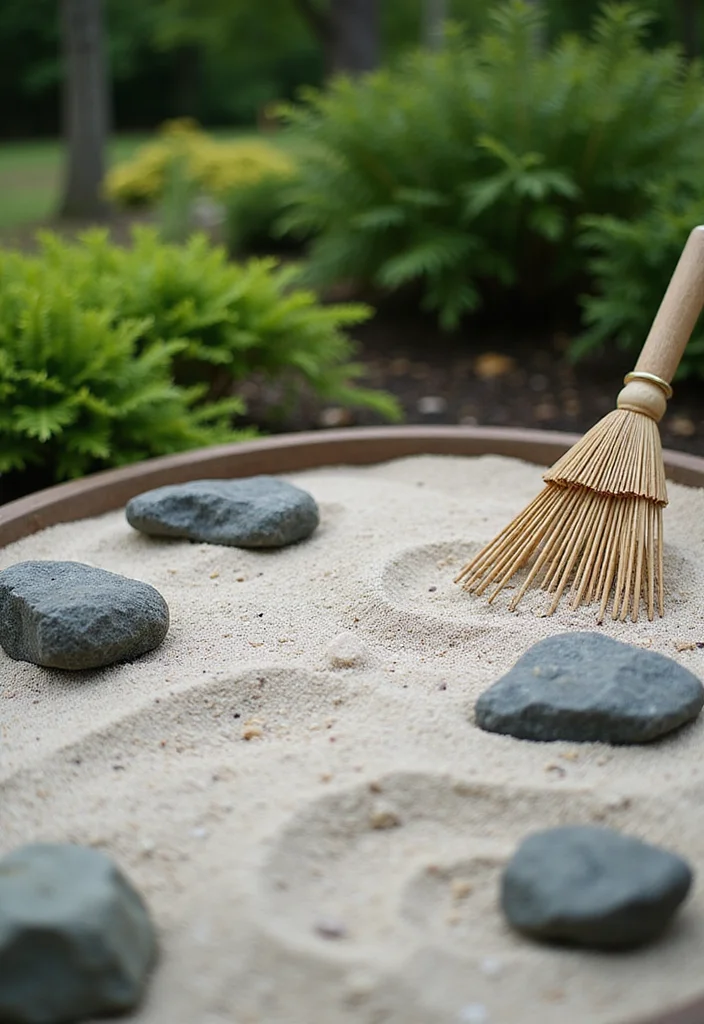
Miniature Zen gardens are a charming way to introduce peace into tiny spaces. You can create these gardens using fine gravel or sand as a base, where you can draw patterns that mimic water’s waves. Incorporating small rocks and tiny plant life, along with a little Buddha statue, adds an inviting touch. Pinterest showcases these delightful gardens, making them a popular choice for creating calm in your home.
To set up your own miniature Zen garden, consider using a shallow container filled with fine white sand for clarity. Arrange your rocks in odd numbers, as this creates balance. Use a rake or even a comb to draw calming patterns in the sand. This little garden can serve as a daily reminder to pause, breathe, and reflect, enhancing your mindfulness practice.
2. Vertical Zen Garden Walls
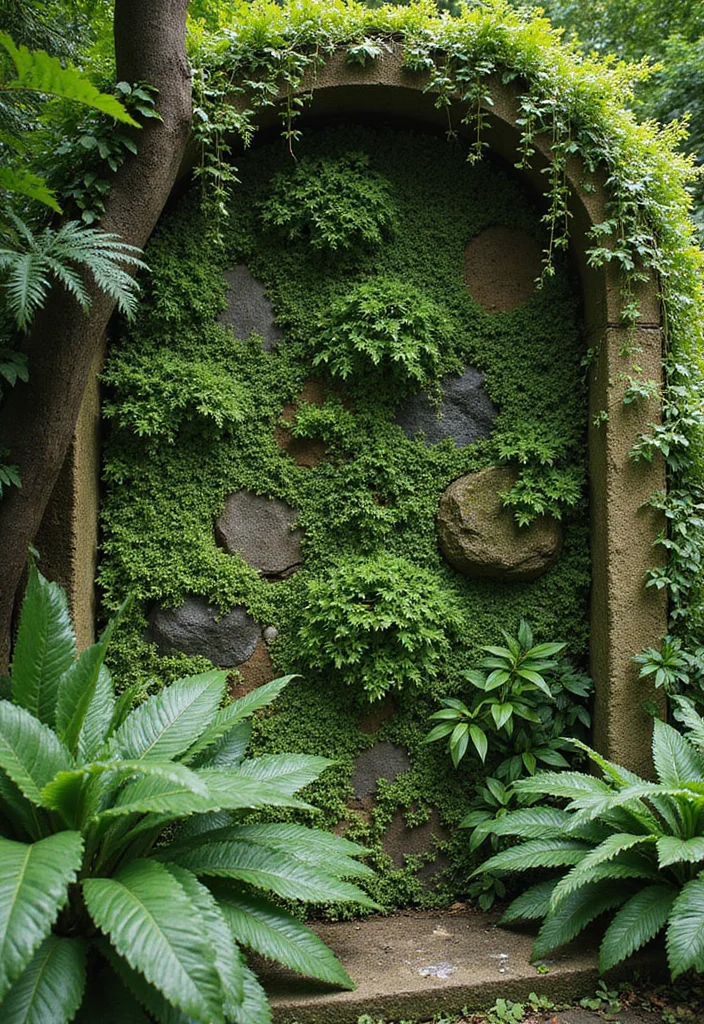
If you’re short on space, why not think vertically? Vertical Zen garden walls can transform your living area into a nature-inspired retreat. By using plants like ferns, succulents, and moss, you can introduce vibrant colors and textures. You can frame these plants with wooden structures or allow them to grow naturally, creating a stunning focal point.
When installing a vertical garden, pick plants suited for your light conditions. Ensure your setup has good drainage to keep your plants thriving. Adding stones or driftwood can also enhance the visual appeal. This design not only conserves space but also provides a captivating landscape, contributing to a soothing atmosphere perfect for relaxation.
3. Rock Garden Serenity
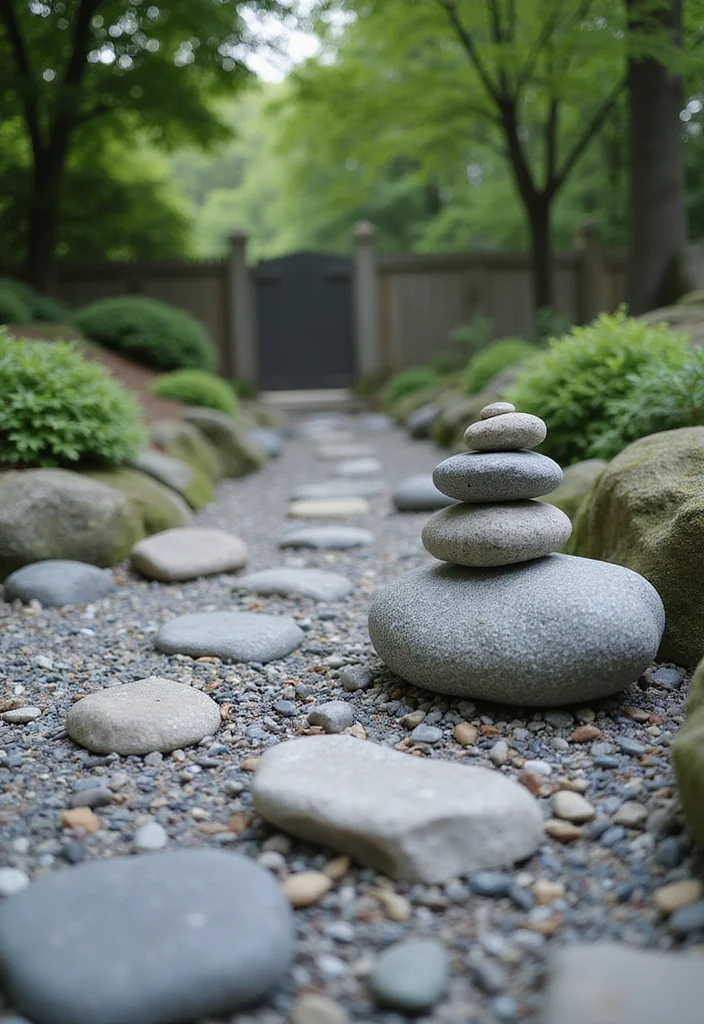
Rock gardens, also known as dry landscapes, are essential to traditional Zen gardens. They represent mountains and rivers, creating a serene environment for meditation. Begin with gravel as your base, placing larger stones strategically to form a balanced layout. Adding small plants like sedums or creeping thyme can bring life and color to your space.
For an appealing rock garden, choose natural stones in various shapes and sizes for visual interest. Create pathways with gravel to encourage exploration. Adding a water feature can also introduce soothing sounds. This design beautifully blends aesthetics with tranquility, making your garden a perfect retreat.
4. Water Features for Meditation
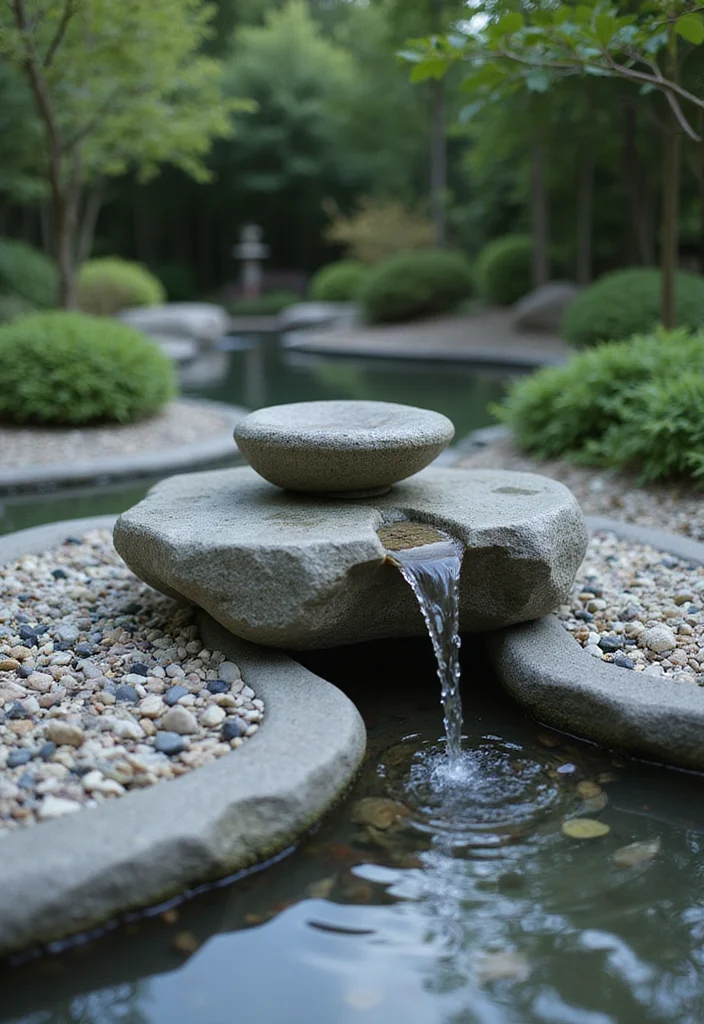
Incorporating a water feature in your Zen garden can elevate its tranquility. The gentle sounds of a fountain, pond, or water bowl can be incredibly calming. Surrounding the water with pebbles and plants creates visual appeal and attracts wildlife.
When adding water features, choose designs that fit your space. Use natural stones to maintain your Zen theme. Solar-powered pumps are an eco-friendly choice for fountains. The movement of water, along with its reflective quality, adds depth, creating a peaceful atmosphere ideal for meditation.
5. Pathways of Peace
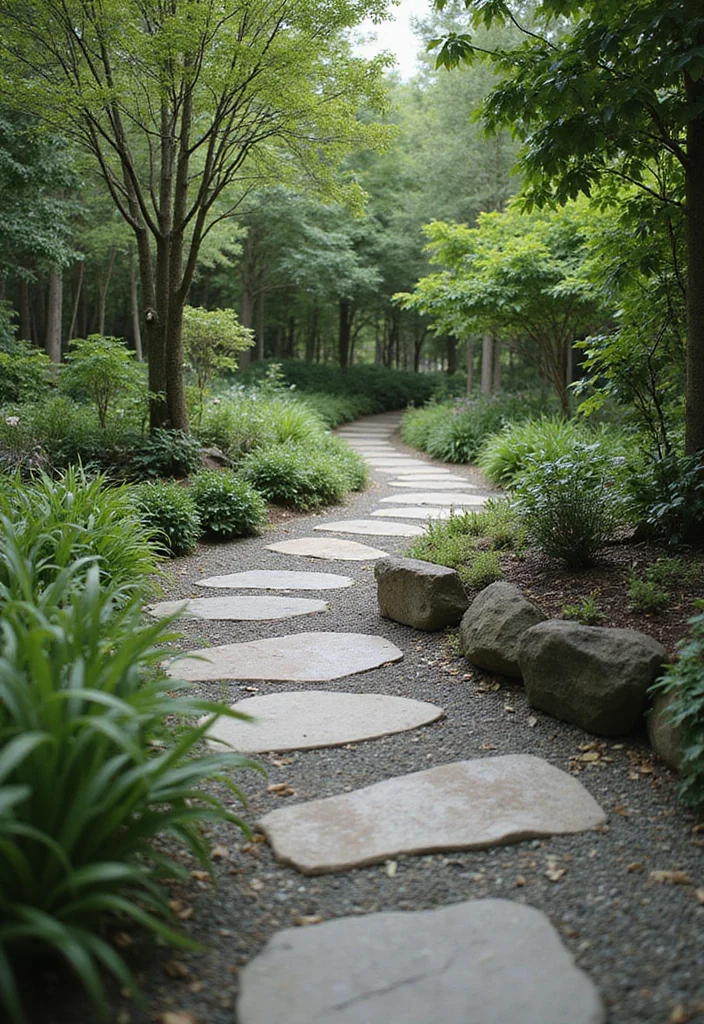
A well-designed pathway can enhance your Zen garden experience, inviting mindfulness. Using natural materials like stones, gravel, or wood can create a welcoming trail. Your pathways should meander, reflecting life’s spontaneous nature and encouraging leisurely walks.
Consider varying the widths of your paths to add visual interest. Surround them with small stones or soft moss for a natural feel. Placing benches along the way invites moments of reflection. Your pathways encourage you to slow down, explore, and truly appreciate the beauty of your garden.
6. Zen Garden Benches
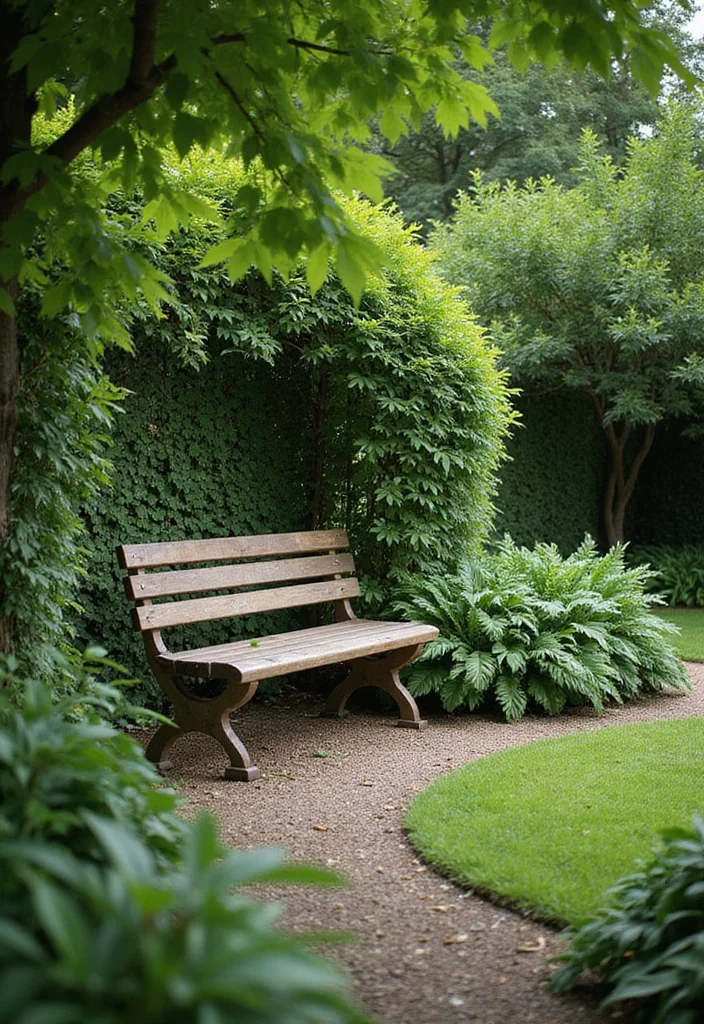
Creating a cozy sitting area can greatly enhance your meditation experience. A simple wooden bench or a stone seat allows you to pause and take in your surroundings. Position your bench to overlook a beautiful aspect of your garden, such as a water feature or rock arrangement.
To make your seating area inviting, add cushions or soft throws for comfort. Surround the bench with fragrant plants like lavender or jasmine for calming scents. Small lanterns or candles can provide ambiance during the evenings. This little nook becomes a perfect spot for quiet contemplation after a busy day.
7. Mindful Plant Choices
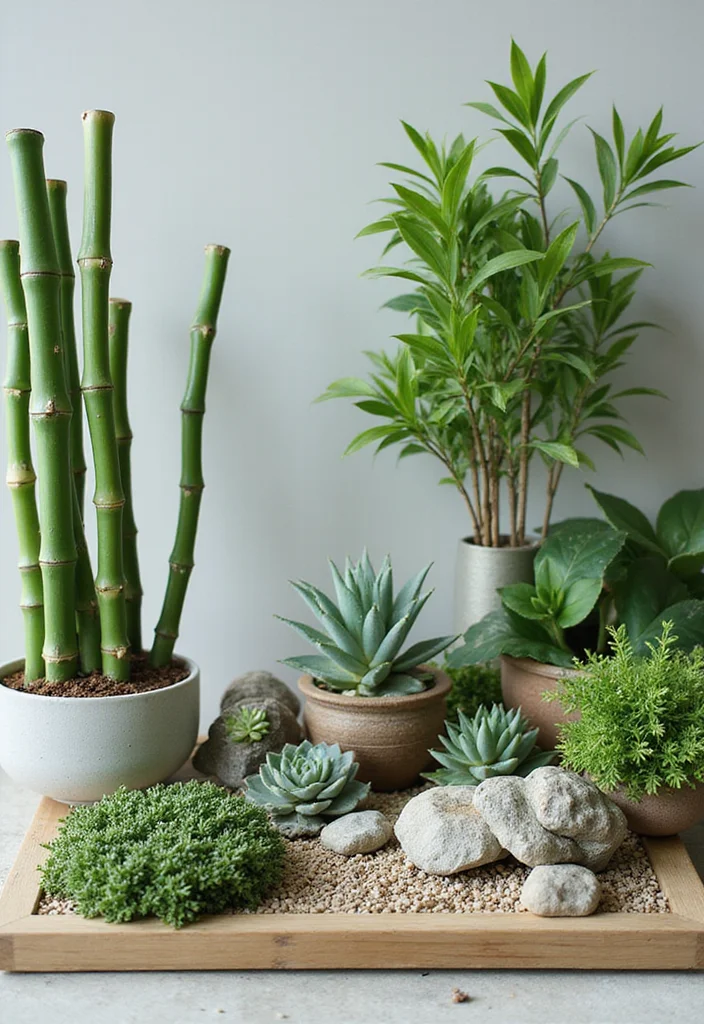
Choosing the right plants is crucial for a tranquil Zen garden. Look for species that embody calmness and are easy to maintain. Plants like bamboo, moss, and succulents add texture and color to your space.
When selecting plants, opt for slow-growing varieties to achieve a timeless look. Group plants in odd numbers for a balanced aesthetic. Consider plants with pleasing scents for a more immersive experience. Thoughtful plant selection fosters a sense of peace, enhancing your mindfulness journey.
8. Sand Raking Techniques

Raking sand in a Zen garden is more than a task; it’s a meditative practice that fosters mindfulness. The patterns you create symbolize the ripples of water, providing a canvas for contemplation. Use a simple rake to create lines and curves that invite a sense of calm through repetitive motion.
To enhance this practice, start small with a section of your garden. Experiment with different patterns until you find what resonates with you. Making this a regular ritual can turn a simple task into a meaningful meditation. The act of raking beautifies your garden while nourishing your spirit.
9. Incorporating Stones and Boulders
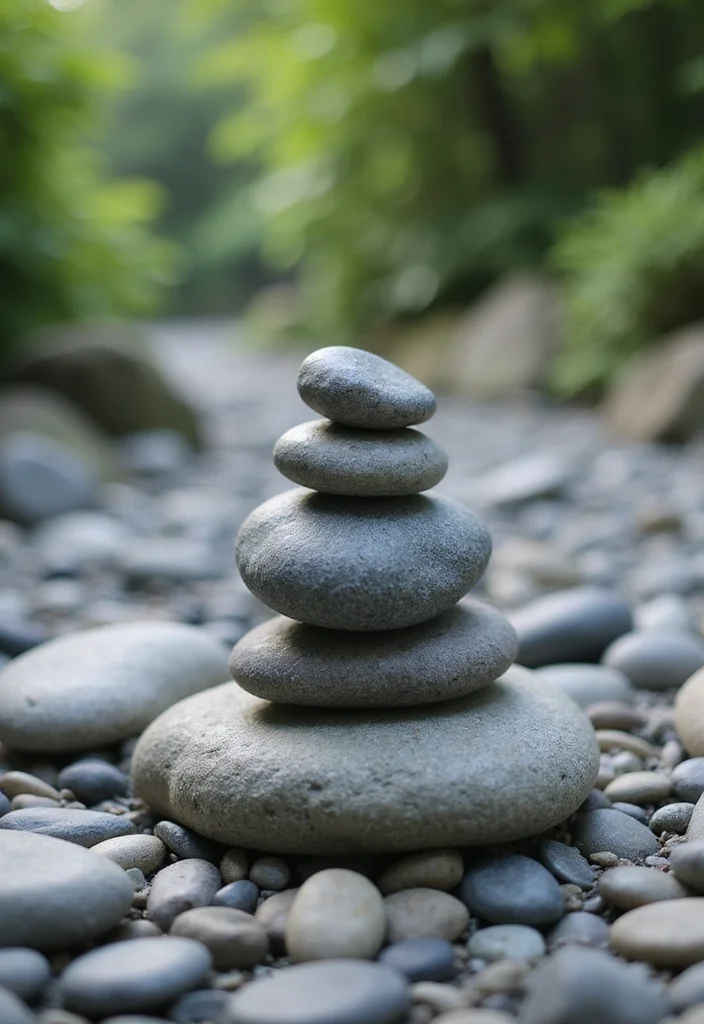
Stones and boulders play a significant role in Zen gardens, representing permanence and nature. Their placement can balance your garden’s design and enhance its spiritual significance. Choose natural stones that harmonize with your overall aesthetic.
For effective stone use, select larger boulders as focal points. Arrange smaller stones in groups of three for balance. Incorporate pebbles for contrast and added texture. These elements ground your garden, offering visual appeal and a deeper connection to nature.
10. Seasonal Zen Gardening
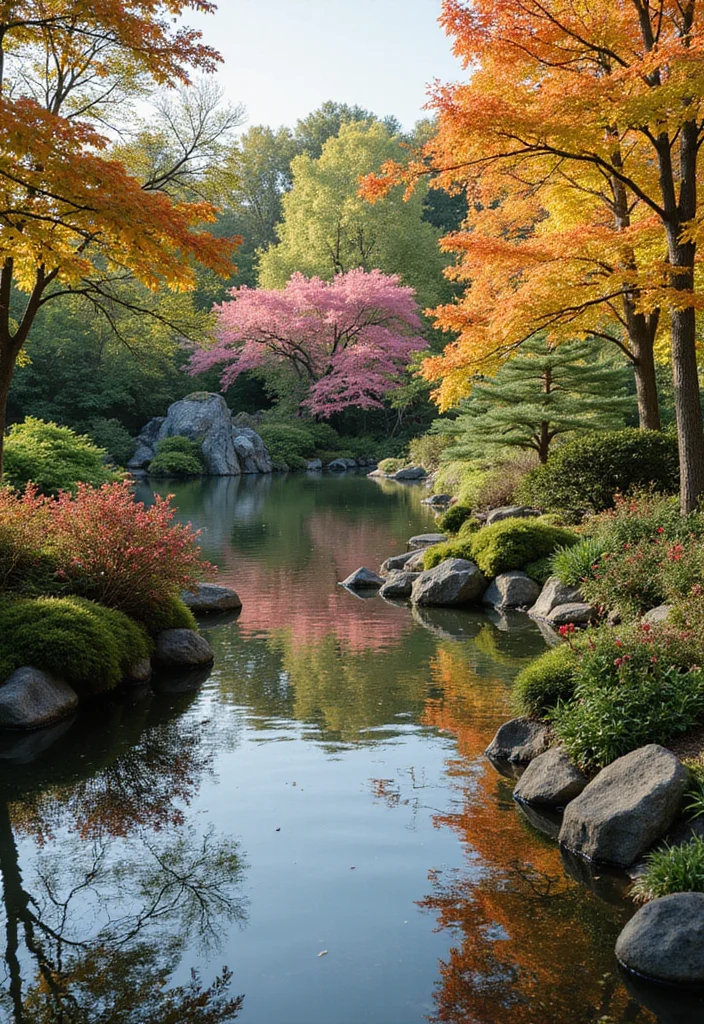
Embracing the seasons in your Zen garden can deepen your connection to nature. Each season brings unique beauty, and adapting your garden can be a rich experience. In spring, add flowering plants like cherry blossoms. In summer, use vibrant greens and hydrangeas. Fall invites warm colors with chrysanthemums, while winter can spotlight evergreens.
To enhance your seasonal approach, rotate plants to reflect changes. Use seasonal decorations like lanterns or themed stones. Regularly tending to your garden helps you appreciate its evolution. Engaging with the seasons opens opportunities for reflection and renewal.
11. Aromatic Elements in Meditation Spaces
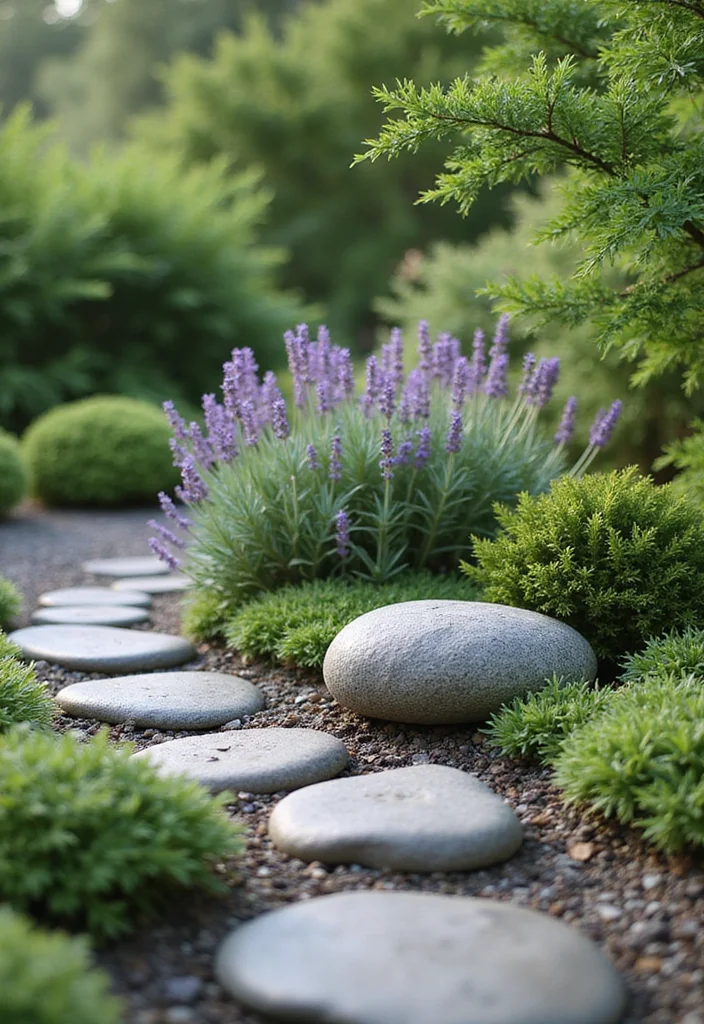
Incorporating fragrant plants can enhance your Zen garden, enriching your meditation experience. Plants like rosemary, lavender, and mint attract beneficial insects while soothing the senses. Plant these aromatic varieties near seating areas or pathways, allowing their scents to envelop you as you meditate.
To use aromatic plants effectively, group them together for a sensory haven. Choose varieties that thrive in your local climate for easy care. You might even try herbs for cooking, giving them a dual purpose. This fragrant touch not only delights your senses but also helps transport you to a calming mental space.
12. Mindful Gardening Rituals
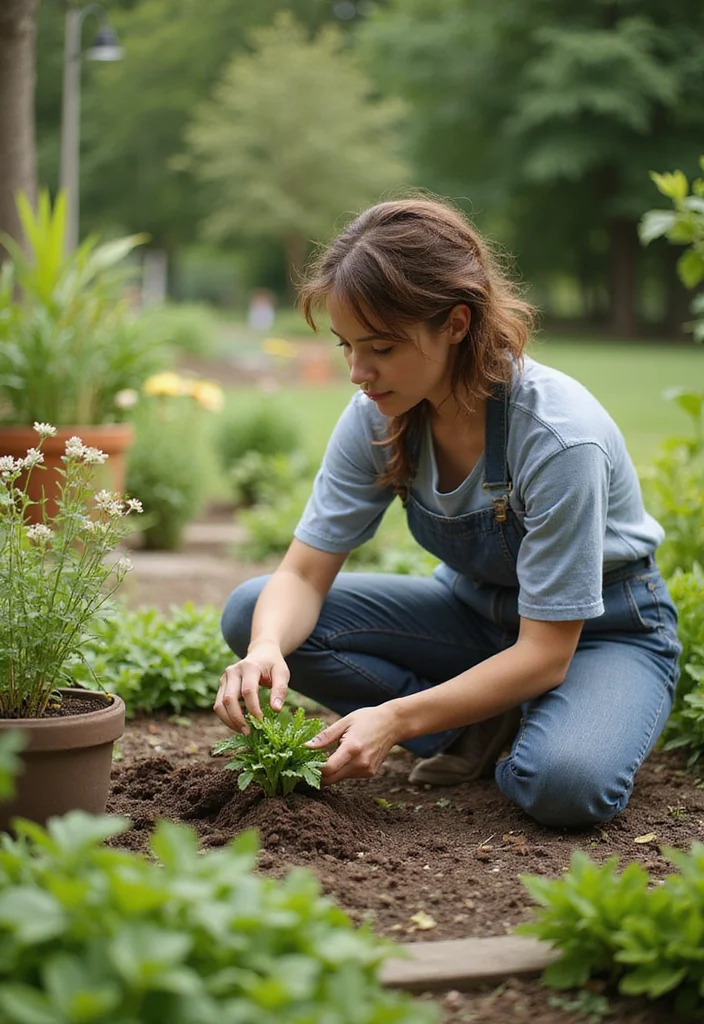
Creating rituals around gardening can turn routine tasks into moments of mindfulness. Whether watering, pruning, or planting, each action can become part of your meditative practice. Set a regular time to engage with your garden, allowing you to slow down and connect with nature.
To cultivate these rituals, use all your senses—observe colors, inhale scents, and listen to sounds. Reflect on your thoughts and feelings while gardening. Journaling your experiences can also provide deeper insight. These mindful moments enhance your gardening practices and foster inner peace.
13. Layering Textures with Ground Covers
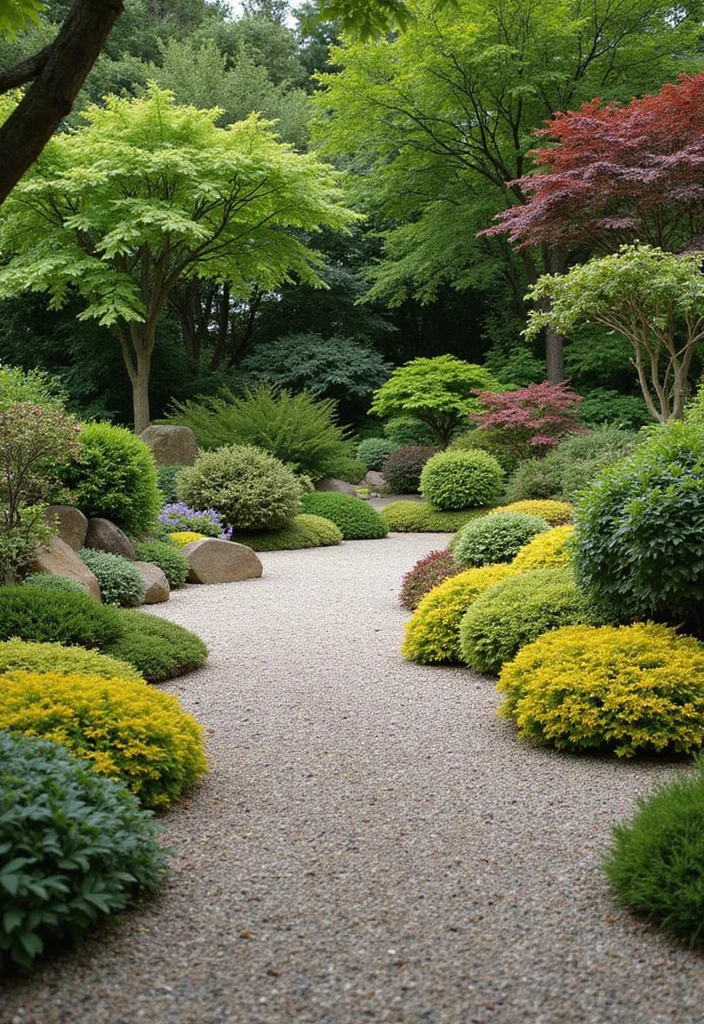
Ground covers are vital in Zen gardens, offering lush layers while minimizing maintenance. Varieties like creeping thyme, moss, and sedum add texture and color at ground level. Choosing the right ground cover can transform empty spaces into a serene haven.
To optimize ground cover designs, select native plants for easy growth. Layer different textures for visual interest. Use ground covers to define pathways or garden sections. These elements contribute to a calm atmosphere, inviting visitors to explore while keeping maintenance minimal.
14. Engaging the Senses with Lighting
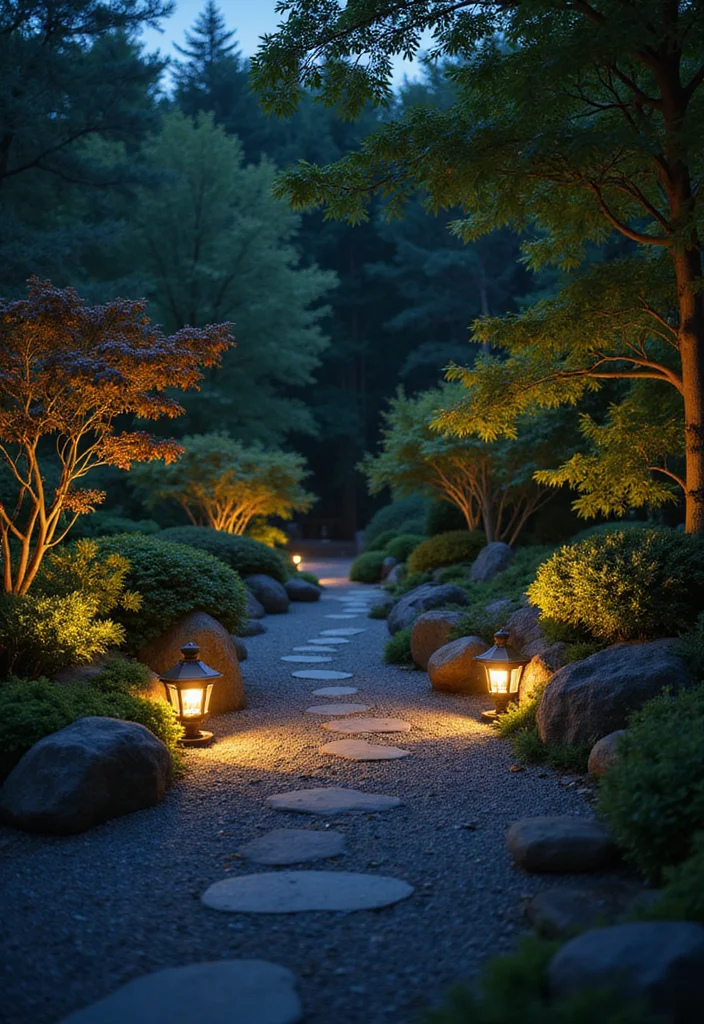
Proper lighting can transform your Zen garden into a magical retreat at night. Soft, ambient lighting creates a warm glow, inviting serenity and peace. Consider using solar-powered lanterns, fairy lights, or downlights to set a cozy atmosphere.
When designing your lighting, opt for warm hues to promote relaxation. Highlight key features, like trees or water, to draw focus. Avoid harsh lighting to maintain tranquility. This thoughtful approach can turn your garden into an enchanting space for meditation and reflection.
15. Incorporating Art into Zen Spaces
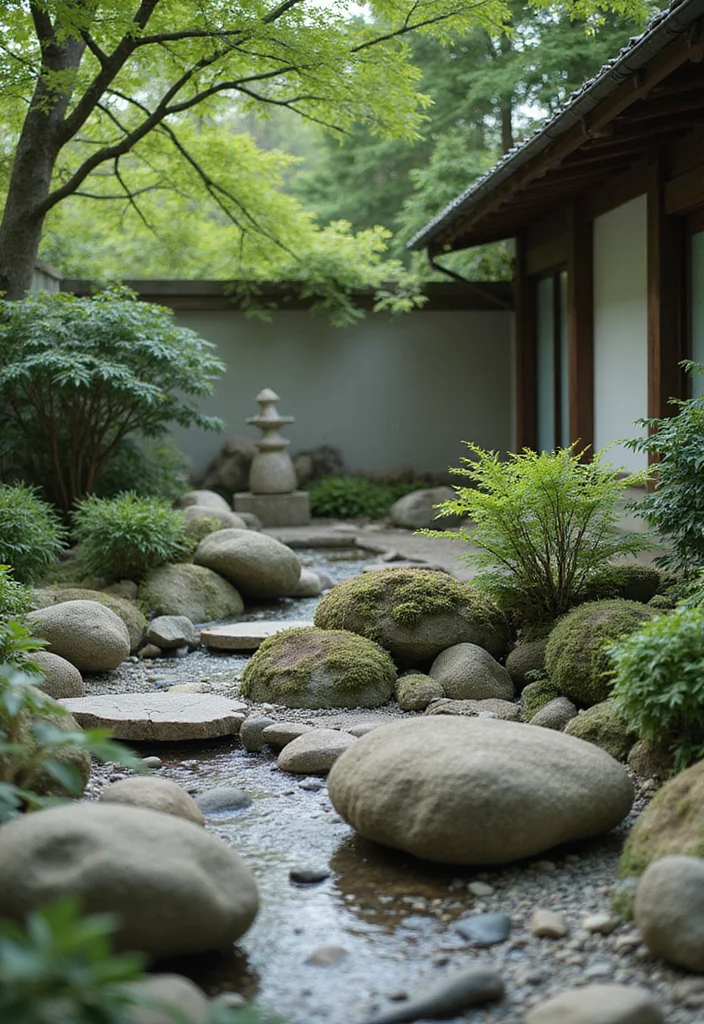
Art can significantly enhance your Zen garden, adding beauty and emotional resonance. Think about sculptures, stone carvings, or wind chimes that fit your garden’s theme. These artistic touches foster a deeper connection and evoke tranquility.
When incorporating art, choose pieces that resonate with you, reflecting your style and mindfulness. Position art strategically to create focal points. Blend art with nature—consider sculptures that interact with plants or water. Art in your garden not only boosts visual appeal but also serves as a reminder to embrace creativity alongside tranquility.
16. Community Zen Spaces
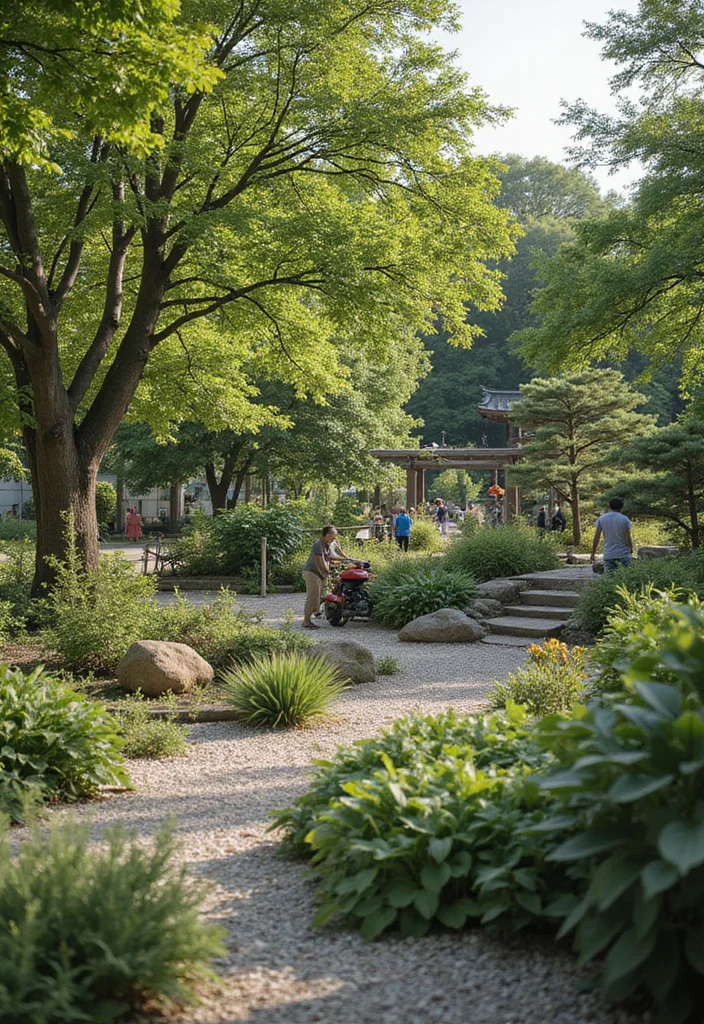
Creating or joining community Zen gardens can spread mindfulness and serenity. These shared spaces connect people with nature and each other, fostering collective calm. Working on a community project is rewarding, as you contribute to a space enjoyed by many.
For community gardens, establish partnerships with local organizations for support. Create a shared vision with input from the community. Include areas for personal contemplation within the larger design. These communal gardens cultivate belonging and peace, enhancing the urban landscape.
17. Mindful Tools and Accessories

Selecting the right tools for your Zen gardening practice ensures peaceful and enjoyable tasks. Hand tools with ergonomic designs make gardening feel like a gentle workout rather than a chore. Consider investing in quality tools that reflect simplicity and mindfulness.
Look for natural materials like wood for a warm feel. Choose compact sizes for easier handling in smaller spaces. Tools that encourage a gentle approach will enhance your gardening experience. The right tools make your practice smoother, allowing you to focus on the meditative aspects of tending to your Zen space.
18. Zen Garden Maintenance Rituals
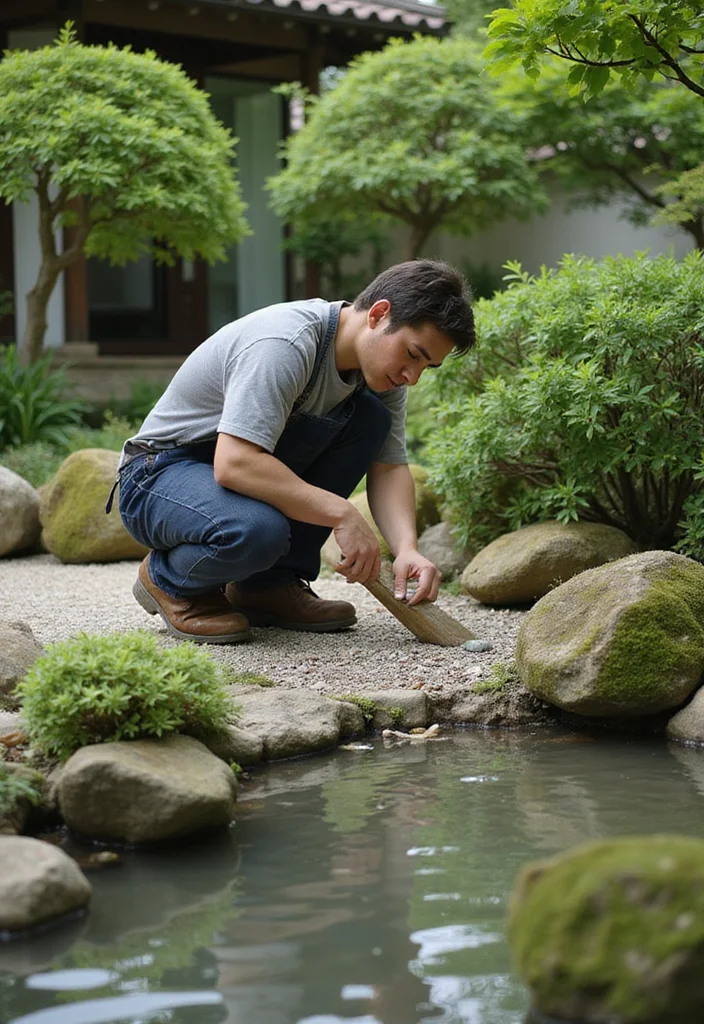
Incorporating maintenance routines can turn necessary chores into mindful practices. Regular care keeps your garden looking great and offers moments to pause and reflect. Create a manageable schedule for watering, raking, and pruning.
During maintenance, engage fully in each task, focusing on the sensations and actions at hand. Find rhythms in your movements, treating each action as a form of meditation. Enjoy the process—after all, the journey is as important as the outcome. Transforming maintenance into mindful rituals fosters a connection and appreciation for your garden.
19. Outdoor Meditation Mats
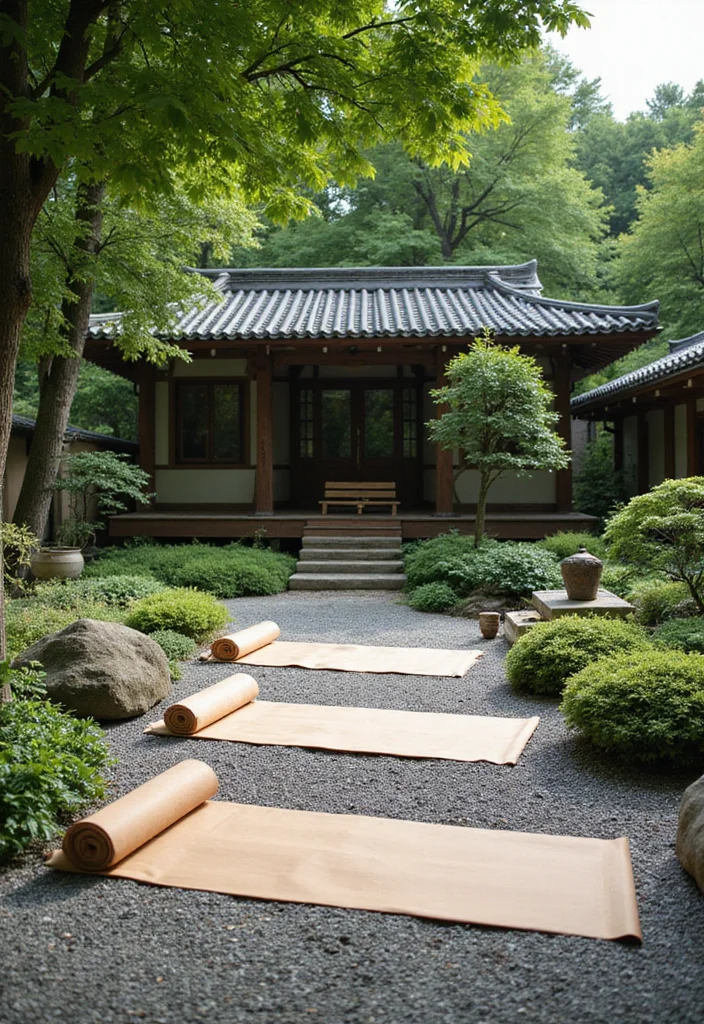
Designing a dedicated meditation area within your Zen garden can greatly enhance your practice. Outdoor mats provide comfort and grounding, making it easier to focus and connect with nature. Choose mats that are portable and weather-resistant for seasonal enjoyment.
When selecting meditation mats, opt for organic materials that align with Zen philosophy. Choose calming colors that complement your garden’s aesthetic. Keep your mats clean and comfortable, inviting you to spend time in meditation. Your meditation space can become a personal sanctuary amidst urban chaos.
20. Reflection Pools as Meditation Aids
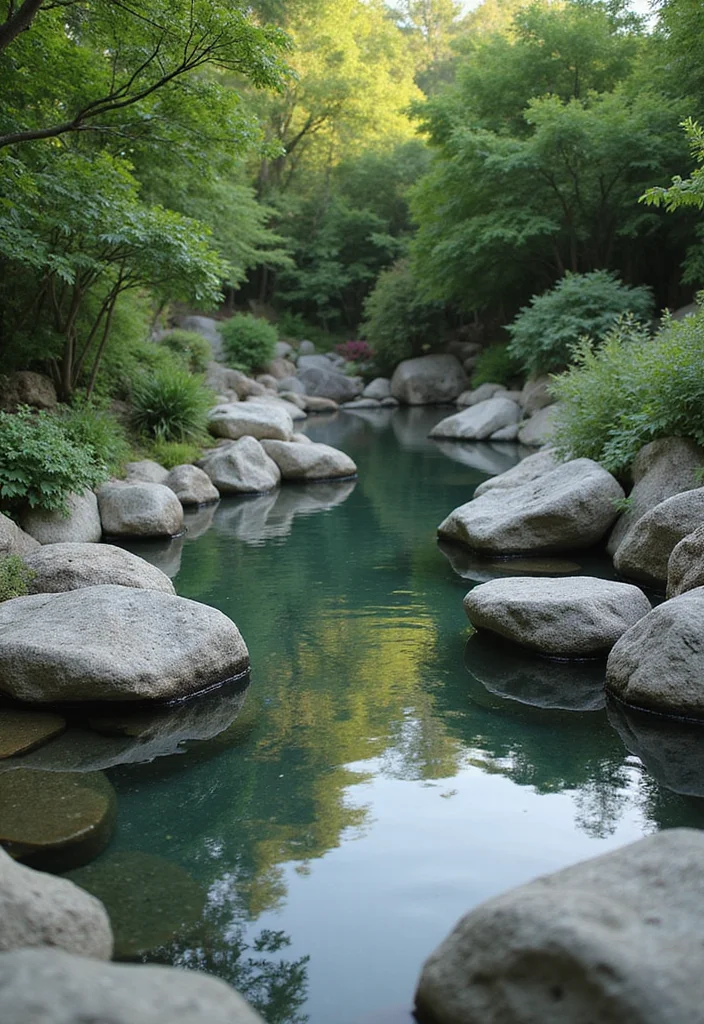
Reflection pools can serve as powerful aids for meditation, offering a mirror-like surface that encourages introspection. The gentle ripples and reflections calm the mind, creating an ideal environment for stillness. Incorporating a pool into your Zen garden can be as simple as a small dish or as grand as a pond.
For effective reflection pools, place them in serene spots that invite contemplation. Surround them with stones or plants to enhance natural beauty. Keeping the water clean and clear ensures the best reflective quality. These pools add aesthetic value and promote calmness and self-reflection, enriching your garden’s atmosphere.
Conclusion
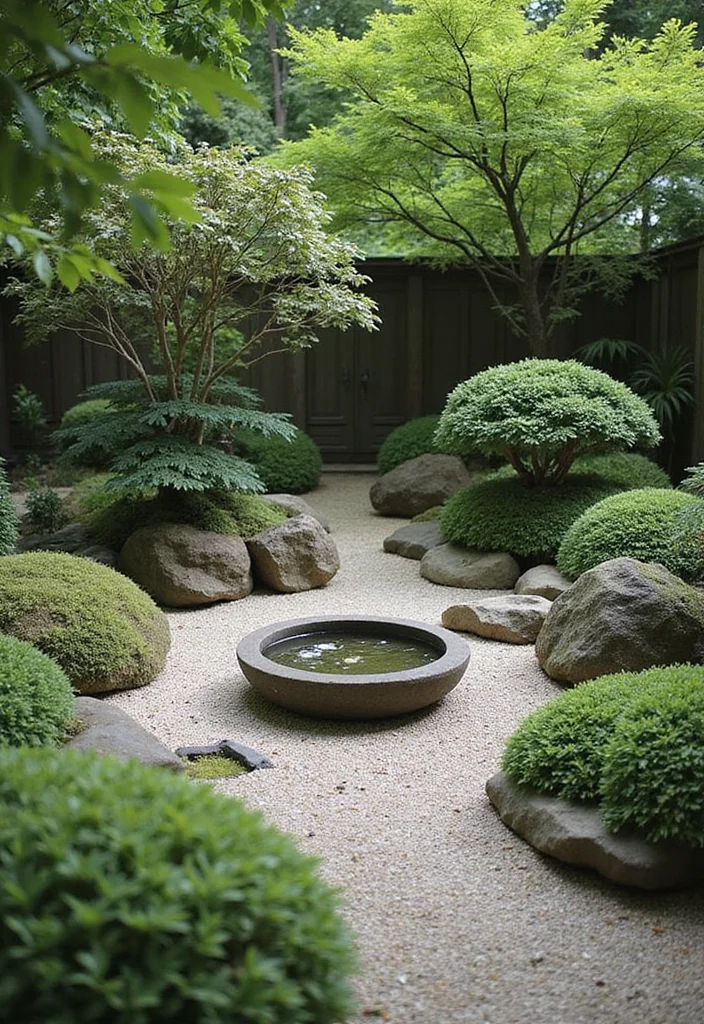
Creating a Zen garden in your urban space is not just about aesthetics; it’s a journey toward mindfulness and tranquility. Each idea presented here serves as an invitation to cultivate a serene environment that nourishes your spirit.
Whether you opt for a miniature garden, a community space, or simply enhance your current setup, the key is to find what resonates with you. Let your garden be a reflection of peace, inviting you to pause, reflect, and grow.
Frequently Asked Questions
What Are the Key Elements of a Zen Garden Design for Meditation?
Creating a Zen garden for meditation involves several key elements that promote tranquility. Start with natural materials like gravel, stones, and plants to create a harmonious landscape.
Incorporate features like a water element or a simple path to guide the mind and enhance focus. Remember, the aim is to create a space that encourages mindfulness and reflection, so keep it minimal and serene.
How Can I Incorporate Zen Garden Ideas in a Small Urban Space?
Even in a small urban space, you can design a Zen garden by using vertical gardening techniques and container plants. Opt for smaller plants, like moss or succulents, to maintain a sense of calm without overwhelming your area.
Use decorative stones or gravel to define spaces and create a peaceful atmosphere. A small bench or seating area can also enhance your meditation space, allowing you to enjoy your serene outdoor space.
What Mindfulness Gardening Techniques Can Enhance My Zen Garden Experience?
Mindfulness gardening techniques can greatly enhance your Zen garden experience. Start by practicing deep breathing while tending to your plants, allowing you to connect with the present moment.
Engage in activities like raking gravel or arranging stones mindfully, focusing on each movement. This not only cultivates tranquility but also encourages a deeper appreciation for the natural beauty within your garden.
How Do I Choose the Right Plants for My Zen Garden?
Choosing the right plants for your Zen garden is essential for creating a serene environment. Look for plants that symbolize tranquility and simplicity like bamboo, Japanese maples, or ornamental grasses.
Consider the climate and sunlight in your urban space, selecting plants that thrive in those conditions. A mix of textures and colors can also enhance the feeling of peace without being too busy, ensuring your space remains calming.
What Are Some Simple Ways to Create Tranquility in Gardening?
Creating tranquility in your gardening practice can be achieved through simple methods. First, establish a routine that includes quiet time in your garden to connect with nature.
Incorporate soothing elements like wind chimes or soft water features to enhance the peaceful ambiance. Lastly, focus on the process rather than the outcome; enjoy the act of gardening as a form of meditation that fosters calm and mindfulness.